Best Hair Masks of 2026: Does your hair feel dry, rough, or like straw? Does it break easily when you brush it? Do you get frizz no matter what products you use?
If yes — your hair is asking for one thing: a good hair mask.
A hair mask is not the same as your regular conditioner. It goes deeper. It repairs from the inside. And when you use the right one for your hair type, the difference can be shocking — even after just one use.
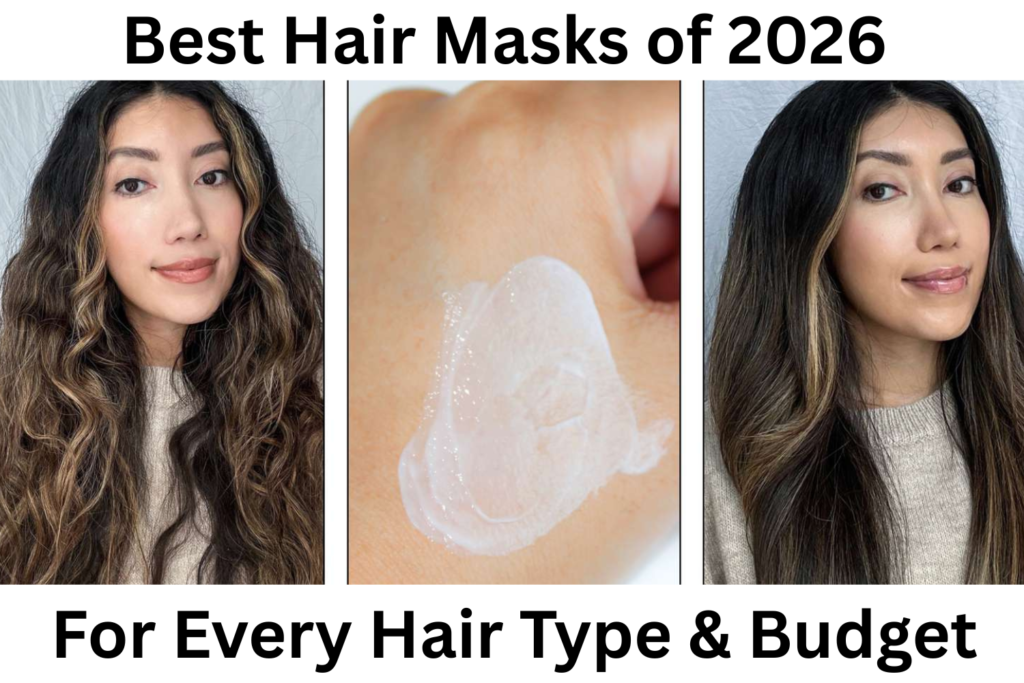
In this guide, we have covered:
- What a hair mask actually does (in simple words)
- The best hair masks of 2026 — for every hair type and every budget
- 3 easy DIY hair masks you can make at home today
- Which ingredients to look for — and which to avoid
- How to use a hair mask the right way (most people get this wrong)
Whether you have bleached hair, frizzy hair, hair fall, or just dry ends — there is a mask in this list for you.
“Masking is one of the easiest things you can do at home to make your hair look healthier. Find the right mask for your hair type and make it a ritual — not an afterthought.”
— Juan Carlos Maciques, Celebrity & Runway Hairstylist
Read Also : How to Cut Your Own Hair for Men & Women 2026 (10 Best Ways)
What Is a Hair Mask — And How Is It Different from Conditioner?
Think of your hair like a brick wall. The outside layer (called the cuticle) is the brickwork — when it is smooth, your hair looks shiny. The inside layer (called the cortex) is the mortar — it gives your hair strength and bounce.
When you use heat, bleach, or harsh chemicals, both layers get damaged. The bricks crack. The mortar weakens.
A regular conditioner only smooths the surface for a short time — like painting over a cracked wall. It looks better, but nothing is actually fixed.
A hair mask goes inside. It repairs the mortar. It fills the cracks. That is why the results last longer and feel more real.
“Hair masks contain active ingredients that work into the inner layer of the hair — known as the cortex — to add moisture, proteins and nutrients, while also repairing damage and strengthening your hair.”
— Hollie Rose Clarke, Living Proof Stylist & Brand Ambassador
Hair Mask vs. Conditioner vs. Deep Conditioner — What’s the Difference?
People mix up these three all the time. Here is a simple breakdown:
| Product | Leave On For | How Deep It Works | Best For |
|---|---|---|---|
| Regular Conditioner | 2–3 minutes | Surface only | Daily detangling |
| Deep Conditioner | 5–15 minutes | Slightly deeper | Weekly moisture boost |
| Hair Mask | 15–60 minutes | Deep into the cortex | Intensive repair |
| Leave-In Conditioner | All day | Surface coating | Fine hair, heat protection |
| Protein Treatment | 5–20 minutes | Cortex bond repair | Breakage, bleach damage |
Simple rule: The more time you leave it on, the deeper it works. Hair masks stay on the longest — so they give the deepest results.
Signs Your Hair Needs a Mask Right Now
Not sure if you actually need a hair mask? Check this list:
- Your hair snaps or breaks when you brush or pull it
- Ends feel dry and rough even after conditioning
- Hair looks dull and lifeless — no shine
- Frizz that never goes away, no matter what you use
- Your hair colour fades very fast
- Hair feels gummy or stretchy when wet (sign of serious damage)
- Itchy, dry scalp with flaking
- Hair has been bleached, coloured, or chemically treated
If you said yes to even two of these — start using a hair mask this week.
Best Hair Masks of 2026 — Quick Comparison Table
Here is a quick look at our top picks before we go into the full reviews:
| Product | Best For | Star Ingredient | Price (India) |
|---|---|---|---|
| Olaplex No. 8 Bond Repair Mask | Damaged & bleached hair | Bond-building technology | ₹3,200–3,500 |
| K18 Leave-In Molecular Repair | All types, no rinse needed | K18 Peptide | ₹4,200–4,500 |
| Briogeo Don’t Despair, Repair! | Curly & clean beauty | Rosehip Oil + B-Vitamins | ₹3,600–3,900 |
| Moroccanoil Intense Hydrating | Dry & frizzy hair | Argan Oil | ₹3,400–3,700 |
| Kérastase Masque Magistral | Very dry, thick hair | Iris Root + Glucose Proteins | ₹4,000–4,400 |
| Wella Professionals Fusion | Colour-treated hair | Amino-Casule Technology | ₹2,600–2,900 |
| SheaMoisture Manuka Honey | Curly & natural hair | Manuka Honey + Mafura Oil | ₹1,100–1,300 |
| Mamaearth Onion Hair Mask | Hair fall (India) | Onion Oil + Coconut Milk | ₹449–499 |
| L’Oreal Elvive Total Repair 5 | Budget drugstore pick | Ceramide + Pro-Keratin | ₹699–799 |
| Biotique Bio Kelp Protein Pack | Oily scalp, Ayurvedic | Kelp + Bhringraj | ₹299–349 |
Best Hair Masks by Hair Type — Full Reviews
The biggest mistake people make is buying a random mask without thinking about their hair type. The right mask for thick curly hair can ruin fine straight hair — and vice versa.
Find your hair type below and go straight to that section:
Best Hair Mask for Damaged & Chemically-Treated Hair
If you have bleached, coloured, permed, or straightened your hair — this section is for you.
Chemical treatments break tiny bonds inside your hair (called disulfide bonds). These are like the screws holding your hair together. When they break, hair becomes weak, frizzy, and snappy. A regular conditioner cannot fix this. You need a mask with bond-repair technology.
🥇 Olaplex No. 8 Bond Repair Hair Mask
BEST OVERALL · Best for Damaged & Bleached Hair
Key Ingredients: Bond Intense Moisture Technology, Vitamin C & E, emollients
Best For: Bleached, coloured, heat-damaged hair of all types
How to Use: Apply to clean, damp hair from mid-shaft to ends. Wait 10 minutes. Rinse. Use once or twice a week.
✨ Pro Tip: Apply immediately after a colour service while hair is still damp. The bond-repair technology works fastest on freshly processed hair.
The Olaplex No. 8 is used in salons worldwide and is trusted by millions of people with colour-treated hair. What makes it special is the bond-building system — it actually goes inside the hair shaft and reconnects the broken bonds. After one use, hair feels noticeably less frizzy and more elastic.
🥈 K18 Leave-In Molecular Repair Hair Mask
RUNNER-UP · Best No-Rinse Mask
Key Ingredients: Patented K18 Peptide (biomimetic)
Best For: All hair types with chemical or heat damage. Great for those with very little time.
How to Use: After shampooing, towel-dry hair. Apply 1–2 pumps. Comb through. Do NOT rinse. Style as normal.
✨ Pro Tip: Use K18 every 4th wash for maintenance. For severely damaged hair, use it 4 washes in a row for a full repair cycle.
K18 works completely differently from other masks. It does not need heat. It does not need rinsing. Its peptide molecule is shaped exactly like a missing piece of your hair’s protein chain — it literally slots in and fills the gap. It is genuinely revolutionary.
Best Hair Mask for Dry & Dehydrated Hair
Dry hair and dehydrated hair are not the same thing, even though they feel similar.
- Dry hair = lacks natural oil. Common in curly, coarse, or older hair.
- Dehydrated hair = lacks water. Caused by hard water, over-washing, or a damaged surface that cannot hold moisture.
Good news: Most deep hydration masks fix both problems.
🥇 Kérastase Masque Magistral
BEST FOR SEVERE DRYNESS · Salon-Grade Luxury
Key Ingredients: Iris Root Extract, Glucose Proteins (Nutri-Filler), Lipids
Best For: Thick, coarse, very dry hair. Hair that feels rough and porous.
How to Use: Apply after shampooing. Leave 5–10 minutes (longer for deeper results). Rinse well.
✨ Pro Tip: Wrap hair in a warm towel after applying. The heat opens the hair surface so the ingredients go in deeper. Wait 5 minutes, then rinse.
🥈 Moroccanoil Intense Hydrating Mask
RUNNER-UP · Best for Frizzy & Dry Hair
Key Ingredients: Argan Oil, Linseed Extract, Red Algae
Best For: Dry, frizzy, medium-to-thick hair. Especially good in humid weather.
How to Use: Apply to damp hair. Leave 5–7 minutes (up to 20 for deep treatment). Rinse with cool water.
✨ Pro Tip: If you also use Moroccanoil Treatment oil as a finishing product, this mask makes the oil work even better — it primes the hair from inside first.
Best Hair Mask for Curly & Coily Hair
Curly hair is naturally drier than straight hair. This is not because curly hair produces less oil — it is because the spiral shape of the hair strand stops the oil from travelling down from the roots to the ends.
This means curly and coily hair needs a lot more moisture than other hair types. Weekly masking is not optional — it is essential.
“For curly and coarse hair, a mask should be used with every wash. Curly and coarse hair has more porous properties and loses moisture faster than finer hair types. Skipping the mask is one of the most common mistakes curly-haired people make.”
— Hannah Gaboardi, Certified Trichologist & Viviscal Brand Ambassador
🥇 Briogeo Don’t Despair, Repair! Deep Conditioning Mask
BEST FOR CURLY HAIR · Best Clean Beauty Mask
Key Ingredients: Rosehip Oil, Algae Extract, B-Vitamins (B1, B2, B3, B5, B6), Almond Oil
Best For: Curly (3A–4C), coily, dry, or colour-treated hair. Great if you prefer natural, clean ingredients.
How to Use: Apply to clean, damp hair. Leave 5–20 minutes. Cover with a shower cap + add heat for best results. Rinse.
✨ Pro Tip: This mask is lighter than most — you can even use it as a daily co-wash (conditioner wash) on very dry curl patterns without worrying about build-up.
🥈 SheaMoisture Manuka Honey & Mafura Oil Intensive Hydration Mask
RUNNER-UP · Best Budget Mask for Natural Hair
Key Ingredients: Manuka Honey, Mafura Oil, African Rock Fig
Best For: 4A–4C coily hair, natural hair, anyone on a tight budget
How to Use: Apply generously to damp hair. Cover for 15–20 minutes. Sit under a hooded dryer for extra penetration. Rinse fully.
✨ Pro Tip: Manuka honey pulls moisture from the air into your hair. In India’s humid climate, this actually works in your favour — your curls stay moisturised longer between washes.
Best Hair Mask for Fine & Thin Hair
Fine hair owners often avoid masks because they are scared of that heavy, flat, greasy feeling. That fear makes sense — but it only happens when you use the wrong mask.
Fine hair still needs moisture and protein. You just need a lightweight mask that strengthens without coating.
🥇 Living Proof Restore Mask Treatment
BEST FOR FINE HAIR · MIT-Developed Formula
Key Ingredients: Patented OFPMA (Healthy Hair Molecule), Tripeptide Complex
Best For: Fine to medium hair prone to frizz, flatness, and humidity.
How to Use: Apply a small amount (pea-sized for fine hair) from mid-shaft to ends. Leave 5 minutes. Rinse.
✨ Pro Tip: Less is more for fine hair. A coin-sized amount is enough. Using too much is why fine-haired people say masks don’t work for them.
Best Hair Mask for Colour-Treated Hair
Colouring your hair — especially bleaching — opens up the outer layer of the hair and strips away the natural fats and oils that protect it. This makes coloured hair more porous, which means it absorbs and loses moisture much faster. That is also why colour fades quickly.
You need a mask that closes the hair surface, repairs the inside, and helps colour last longer.
🥇 Wella Professionals Fusion Intense Repair Mask
BEST FOR COLOUR-TREATED HAIR · Salon Professional
Key Ingredients: Amino-Casule Technology (Silk, Wheat & Soy Amino Acids)
Best For: Bleached, highlighted, or colour-treated hair with breakage
How to Use: Apply to damp hair after shampooing. Wait 10 minutes. Rinse. Use weekly.
✨ Pro Tip: Pair with a colour-safe shampoo before the mask. The shampoo removes leftover colour oxidation, so the mask can do its repair work on a clean surface.
Purple or blue hair masks are toning treatments, not repair masks. They cancel out yellow or brassy tones in blonde, silver, or grey hair using colour theory. Use them once every 1–2 weeks if your blonde looks yellow. Don’t leave them on too long or your hair will turn purple-grey!
Best Budget Hair Mask (Under ₹500 / $8)
You do not need to spend thousands of rupees to see real results. Some of the most affordable masks on the market do a genuinely good job — especially for basic hydration and smoothing.
🥇 L’Oréal Elvive Total Repair 5 Balm
BEST BUDGET PICK · Best Drugstore Hair Mask
Key Ingredients: Ceramide, Pro-Keratin Complex, Arginine
Best For: Dry, damaged, over-styled hair on a budget
How to Use: Apply from mid-shaft to ends after shampooing. Wait 3–5 minutes. Rinse. Use 2–3 times a week.
✨ Pro Tip: Add 2–3 drops of argan oil to the mask before applying. This simple trick boosts the hydration level significantly — for almost no extra cost.
🥈 Biotique Bio Kelp Protein Pack
RUNNER-UP · Best Ayurvedic Budget Pick
Key Ingredients: Seaweed/Kelp, Bhringraj, Walnut, Pepper
Best For: Thin, limp hair with oily scalp. Also good for hair fall.
How to Use: Apply to damp hair including the scalp. Wait 15–20 minutes. Rinse and shampoo.
✨ Pro Tip: This is one of the few masks that is safe to apply to the scalp too. Use it as a weekly scalp treatment in addition to your regular mask.
Best Hair Mask for Indian Hair & Climate
Indian hair faces challenges that most Western brands completely ignore:
- Hard water — Most Indian cities have water with high mineral content. This builds up on hair and stops moisture from getting in.
- High humidity — Causes the hair to swell and frizz — especially in coastal cities.
- Pollution — Dust and particles from the air coat the hair and damage it over time.
- Oily scalp + dry ends — A very common Indian hair pattern. Over-washing the scalp (to control oil) dries out the ends.
🥇 Mamaearth Onion Hair Mask
BEST FOR INDIAN HAIR & HAIR FALL · Made for India
Key Ingredients: Onion Oil (sulphur-rich), Coconut Milk (protein), Yogurt (lactic acid)
Best For: Hair fall, thinning hair, post-partum shedding. India-specific formula.
How to Use: Apply root to tip. Wait 30 minutes. Rinse with lukewarm water. Use twice a week.
✨ Pro Tip: Apply this BEFORE shampooing (not after). This is called a pre-poo method. Sulphur compounds in onion oil penetrate better on dry hair before washing.
Amla (Indian Gooseberry) — One of the richest sources of Vitamin C in nature. Strengthens hair follicles, adds shine, and slows early greying.
Bhringraj — Called the “King of Herbs” for hair. Studies show it stimulates hair follicle activity and reduces hair fall.
Hibiscus — Rich in amino acids and Vitamin C. Prevents early greying and adds softness.
Coconut Oil — One of the only oils proven to actually enter the hair shaft (not just coat it). Reduces protein loss during washing.
Shikakai — A natural cleanser that removes build-up gently without stripping moisture. Great for oily scalps.
Good Ingredients vs. Bad Ingredients — Full Breakdown
Reading a hair mask label can be confusing. Here is everything broken down simply:
Ingredients to Look For
| Ingredient | What It Does | Best Hair Type |
|---|---|---|
| Olaplex Bond Builder | Reconnects broken bonds inside hair shaft | Bleached, chemically-treated |
| Hydrolysed Keratin | Fills gaps in the hair; reduces frizz and breakage | All types |
| Argan Oil | Lightweight hydration + shine, enters the cortex | All types |
| Shea Butter | Seals in moisture, softens hair | Dry, curly, coarse |
| Coconut Oil | One of the only oils that enters the hair shaft | Thick, coarse (avoid on fine hair) |
| Hyaluronic Acid | Pulls water into the hair strand | Dehydrated, fine, colour-treated |
| Panthenol (B5) | Adds moisture, flexibility, reduces static | All types |
| Glycerine | Draws moisture from air into hair — great in humid climates | All types, especially curly |
| Biotin (B7) | Strengthens hair fibre, reduces breakage | Thinning, fragile hair |
| Amla (Indian Gooseberry) | Vitamin C powerhouse; strengthens follicles | Indian hair, hair fall |
| Rosehip Oil | Improves elasticity; helps with colour damage | Colour-treated, dry |
| Manuka Honey | Natural humectant + antimicrobial; moisturises deeply | Curly, dry, sensitive scalp |
Ingredients to Avoid
| Avoid This | Why It’s Bad for Your Hair |
|---|---|
| Sodium Lauryl Sulphate (SLS) | A harsh soap that strips natural oils. Should never be in a mask. |
| SD Alcohol / Isopropyl Alcohol | Drying alcohols. They dry out your hair more with every use. |
| Dimethicone / Cyclomethicone | Heavy silicones that create fake smoothness but block moisture long-term. |
| DMDM Hydantoin / Quaternium-15 | Release formaldehyde slowly. Linked to scalp irritation and sensitivity. |
| Synthetic Fragrance (Parfum) | Can hide hundreds of chemicals. Common cause of scalp reactions. |
| Mineral Oil / Petrolatum | Very heavy coating that blocks moisture from entering the hair. |
“Masks that contain keratin, amino acids, and protein help rebuild structure and strength. Masks with oils and lipids help smooth and protect the hair by creating a sealant that holds in moisture. Ideally, your mask should do both.”
— Hannah Gaboardi, Certified Trichologist
How to Use a Hair Mask the Right Way
Most people do not use hair masks correctly — and then wonder why they do not see results. Here is the step-by-step method that professionals actually use:
Step-by-Step Hair Mask Application
- Shampoo first. Clean hair has no product build-up, so the mask can reach the hair shaft directly. Exception: Pre-poo masks like Olaplex No. 3 go on BEFORE shampooing.
- Squeeze out extra water. Hair should be damp, not dripping. Wet hair dilutes the mask and makes it less effective.
- Divide hair into 4 sections. This makes sure every part of your hair gets evenly covered.
- Apply from mid-length to ends. Unless the mask says “scalp-safe,” avoid the roots. Product on the scalp can clog hair follicles.
- Comb through with a wide-tooth comb. This spreads the mask evenly and gently detangles without breakage.
- Cover with a shower cap. This traps your body heat and opens the hair surface so ingredients go in deeper.
- Add gentle heat (optional but powerful). Wrap a warm towel around your head, or sit near steam. This boosts absorption by up to 30%.
- Wait the recommended time. Follow the instructions on the product. Longer is not always better — some ingredients reach their limit.
- Rinse with cool water. Cool water closes the hair surface and locks in everything you just put in. Never rinse with hot water — it reopens the hair and washes the mask out.
- Use a leave-in (optional). For very dry or curly hair, add a lightweight leave-in conditioner after for extra protection.
When you apply gentle warmth while wearing a hair mask, the tiny scales on the hair surface (called the cuticle) lift slightly. This creates a doorway for the mask’s ingredients to go deeper into the hair. Even sitting in a steamy bathroom for 10 minutes works. Trichologists call this the “thermal absorption window.” Simple — but powerful.
How Often Should You Use a Hair Mask?
More is not always better. Using protein masks every day can actually make hair hard and brittle.
| Your Hair Type / Condition | How Often to Mask |
|---|---|
| Severely damaged, bleached, or over-processed | 2–3 times per week |
| Dry or colour-treated hair | Once per week |
| Curly or coily hair | Every wash day (1–3x per week) |
| Normal hair, just for maintenance | Every 1–2 weeks |
| Fine or oily hair | Once every 2–3 weeks |
| Right after bleach / colour / perm | Daily for first week, then weekly |
3 DIY Hair Masks That Actually Work (Made at Home)
Kitchen ingredients have been used for centuries to care for hair — and modern science confirms why they work. Here are three DIY masks, explained simply:
DIY Mask #1: Egg + Olive Oil (Deep Repair Mask)
Best for: Dry, brittle, protein-deficient, or chemically-treated hair
What you need:
- 2 whole eggs
- 2 tablespoons extra-virgin olive oil
- 1 tablespoon raw honey
How to make it:
- Whisk everything together until smooth (no lumps)
- Apply to damp hair from root to tip, working in sections
- Cover with a shower cap and wait 20–30 minutes
- Rinse with cool water — warm water will cook the egg in your hair!
- Shampoo gently to remove any residue
DIY Mask #2: Avocado + Argan Oil (Frizz-Taming Mask)
Best for: Frizzy, curly, thick, or humidity-prone hair
What you need:
- ½ ripe avocado (mashed completely smooth — no lumps)
- 2 tablespoons coconut oil (melted)
- 1 tablespoon argan oil
- Optional: 5 drops rosemary essential oil
How to make it:
- Blend or mash the avocado until it is completely smooth — any lumps will tangle in your hair
- Stir in the oils until the mixture is uniform
- Apply to towel-dried hair, focusing on mid-shaft to ends
- Cover with a shower cap and wait 30–45 minutes
- Rinse well, then shampoo twice to fully remove the oil
DIY Mask #3: Amla + Yoghurt (Scalp & Hair Fall Mask — India Special)
Best for: Hair fall, itchy scalp, Indian hair, post-partum shedding, hot/dry climate
What you need:
- 4 tablespoons plain whole-milk yoghurt (room temperature)
- 1 tablespoon amla (Indian gooseberry) powder
- 1 teaspoon raw honey
- Optional: 1 teaspoon fenugreek (methi) powder for extra hair growth support
How to make it:
- Mix everything into a smooth paste (no lumps)
- Apply root to tip, massaging gently into the scalp for 2–3 minutes
- Wait 30–45 minutes
- Rinse with lukewarm water, then shampoo with a gentle formula
Frequently Asked Questions
Can I use a hair mask every day?
No — and this is important. Using protein-rich masks every day causes protein overload, which makes hair hard, stiff, and more prone to breaking. Using heavy oil masks daily causes build-up and limp hair. Stick to 1–3 times per week depending on your hair type. The only exception is very lightweight leave-in masks specifically made for daily use — always check the label.
Should I apply a hair mask before or after shampooing?
Most masks go after shampooing, on clean damp hair. Clean hair lets the ingredients go in without any barrier. Exception: Pre-poo masks (like Olaplex No. 3 and our DIY Onion Mask) are applied before shampooing, on dry or slightly damp hair. Always check your product’s instructions.
Can a hair mask replace my conditioner?
On days you use a mask — yes, skip the conditioner. The mask does everything a conditioner does, plus much more. But on other days, use your regular conditioner as normal. A mask should be in your routine in addition to conditioner, not instead of it completely.
How long should I leave a hair mask on?
Usually 15–60 minutes, depending on the product. Always follow the label — the brand’s chemists have tested these times for best results. Leaving a mask on all day does not give better results. For overnight masks, only use products specifically designed for overnight wear.
Do hair masks help with hair growth?
Indirectly — yes. Hair masks do not create new growth from the scalp. But by reducing breakage, your hair keeps more of its length. It appears to grow faster because less hair is snapping off. Some ingredients (biotin, amla, fenugreek) also support scalp circulation, which can help over time. Think of it as length retention, not growth stimulation.
Which hair mask is best for frizzy hair in India?
For India’s humidity-triggered frizz, look for masks with glycerine (pulls moisture in and stabilises it), protein (strengthens the hair surface against swelling), and argan oil (seals the cuticle). Our top picks for India: Moroccanoil Intense Hydrating Mask (available on Nykaa), Mamaearth Onion Hair Mask (budget-friendly), or the DIY Avocado + Argan mask above.
Can I use coconut oil as a hair mask?
Yes — but only if you have thick, coarse, or curly hair. Coconut oil is one of the few oils proven to enter the hair shaft and reduce protein loss. However, for fine or low-porosity hair, it is too heavy and will sit on the surface, causing build-up. If you use it, apply to dry hair for 30–60 minutes as a pre-shampoo treatment — then wash it out fully.
Are expensive hair masks worth it?
For basic hydration and smoothing — not always. Budget options like L’Oréal Elvive work perfectly well. But for severe bleach or chemical damage, a bond-repair mask like Olaplex or K18 is worth the price. They use patented technology that budget brands simply cannot replicate. Think of it as the difference between painting a wall (conditioner) and actually fixing the cracks (bond repair).
Can hair masks fix split ends?
No product can permanently fix a split end — this is one of the most common hair myths. A split end is a strand that has physically torn in two. A mask can temporarily smooth and seal it so it looks better for a while, but the split will keep going upward. The only real fix for split ends is a trim. Masks prevent future split ends by keeping hair strong and moisturised — but they cannot undo existing ones.
What is the difference between a hair mask and a deep conditioner?
Deep conditioners are used for 5–15 minutes and focus on hydration and detangling. Hair masks stay on for 15–60+ minutes and have higher concentrations of repairing, strengthening ingredients. Hair masks are more intensive. Both are stronger than a regular conditioner — but a mask is the most powerful of the three.
Final Conclusion: Our Top 3 Picks for Every Budget
After going through ingredients, hair types, application techniques, and DIY alternatives — here is the bottom line:
🏆 Best Overall
Olaplex No. 8 Bond Repair Hair Mask
Works for almost every hair type. Uses real bond-repair technology. Results visible from the first use. Worth every rupee for damaged or colour-treated hair.
💚 Best Budget Pick
L’Oréal Elvive Total Repair 5
Delivers real smoothing and hydration at an everyday price. Widely available across India. The best place to start if you are new to hair masking.
🇮🇳 Best for Indian Hair
Mamaearth Onion Hair Mask
Made specifically for Indian hair concerns — hair fall, humidity, hard water. Onion oil’s sulphur content supports follicle health. Affordable and easy to find.
Here is the one thing to remember from this entire guide:
Healthy hair is not luck. It is built — one wash day at a time.
Pick the mask that matches your hair type. Use it correctly. Use it consistently. Your hair will show the results within 2–4 weeks.
“Hair masks help balance the pH of your hair by restoring its natural acidic level. This slightly acidic environment keeps the hair cuticles smooth and closed, preventing damage, frizz and moisture loss.”
— Mandy Buechner, Certified Trichologist, Thairapy Wellness Center
Other Useful Link: Hair Masks Best Sellers
Priya is a dedicated skincare enthusiast and wellness researcher with over 10 years of experience in the beauty industry. She specializes in analyzing cosmetic formulations and simplifying complex skincare routines for everyday use. Through Glowvedas, she aims to empower readers with science-backed advice and honest reviews to help them achieve their most radiant self.